Brady Helps

3 chapters in and I'm scared, upset, and concerned.

The opening sentences of Annie Jacobsen’s book, “Nuclear War: A Scenario” haunt and pique the senses.

A 1-megaton thermonuclear weapon detonation begins with a flash of light and heat so tremendous it is impossible for the human mind to comprehend.

The prologue and the next 2 chapters discuss the history of the US’s plan to launch nuclear weapons at Russia and the real effects of the atomic bomb blast over Hiroshima. Most concerning (and admittedly upsetting) was that the US kept the effects of the bomb on Japanese citizens confidential to avoid enemies learning of the effects. I visited Nagasaki’s atom bomb museum a decade ago, the images are real and horrific — what’s the justification for keeping that confidential?

I’m not doing a good job at keeping myself open minded as I’m reading; I’m hoping to improve that as I read. To help me, I’m asking myself curious questions:

  • What was going on around the world in 1957?
  • If I had to be a realist international relations theorist, how would I assure my state’s security? (Reading “The Prince” helps here)
  • What are the tradeoffs I likely considered as an army intelligence officer when I decided to keep the effects of the atom bomb confidential?
  • How might I justify these tradeoffs?

It’s easy to critique history decades later. It’s much a much more generous act to try and inhabit the mind of people who lived long ago and attempt to see the world from their eyes. I’ll give myself more time and put in more effort to make that effort for the people who lived during that time.

Historical empathy aside, I’ll also say that the author’s description of a nuclear blast and immediate aftermaths are scary. And it’s not the author’s description — it’s this little note:

“This scenario — of what the moments after an inbound nuclear missile launch could look like — is based on facts sourced from exclusive interviews with presidential advisors, cabinet members, nuclear weapons engineers, scientists, soldiers, airmen, special operators, Secret Service, emergency management experts, intelligence analysts, civil servants and others who have worked on these macabre scenarios over decades.”

Honestly — this is likely going to be the one of the best books I’ve read in a while.
A book I'm excited to crack open

I just acquired “Nuclear War: A Scenario” by Annie Jacobsen. I’m not looking forward to nuclear war, and it’s my hope that our world never experiences that fate. I became interested in the book because I am interested in risk.How do we define risk? How do we manage risk? How do we game out potential scenarios? What history did we use as the basis for our models? Similar questions to the ones I asked yesterday. Some of the best ways for learning a new way of thinking are to study people who obsess about a thing and write about their obsession. You can learn a lot more about the music industry reading works by people who obsess about music. You’ll learn a lot more about business by reading biographies and autobiographies of people who obsess about a business/industry than a general business book. And I’ll learn more about risk management from someone who obsesses about a horrible scenario and writes about it than from a book on risk.

3 questions to use when confronted with a scenario

Let’s say you are presented with a scenario that includes a prediction — reviewing a job offer, making a health decision, or reviewing a product to purchase. Here are three questions you can use to generate a picture of future-reality, adapted from Donella H. Meadows’ “Thinking in Systems”.

  1. Are the driving factors likely to unfold this way?
  2. If they did, how will life likely unfold?
  3. What is driving the driving factors?

Question 1 is a guess.

Question 2 is your self-test for how well you know yourself.

Question 3 invites you to consider the underlying feedback loop shifts — you do this all the time and perhaps don’t realize it; do you pay for subscriptions?

Let’s say you earn $100 a month. For the last 3 months, you maintain 3 subscriptions each costing you $20 per month, $60 total. You net $40 per month ($100 income - $60 expenses). Over 3 months, your stock of money will grow from $40 to $120 ($40 net x 3 months). Your system is income dominant.

If the subscriptions you maintain each raise their subscription costs by $15, you will now pay $105 per month ($20+$15 x 3 subscriptions). Because your expenses are greater than your income, you will eventually drain your stock of money to $0. Your system shifted from income dominant to expense dominant, and that was driven by increased subscription fees.

Yes, I gave you a simple money management example. Consider this — these types of systems shifts exist everywhere in your life. Shifting from being a predominantly negative thinker to a realist thinker. From being disciplined in a diet/exercise regimen to undisciplined. From being open to being closed. And these shifts are driven by varying drivers — health outcomes, gratitude, energy levels, relationship status, etc.

By understanding how your systems operate and how they’re balanced or dominated can help you better determine how reality interacts with you and how you interact with reality.

Photo of the year

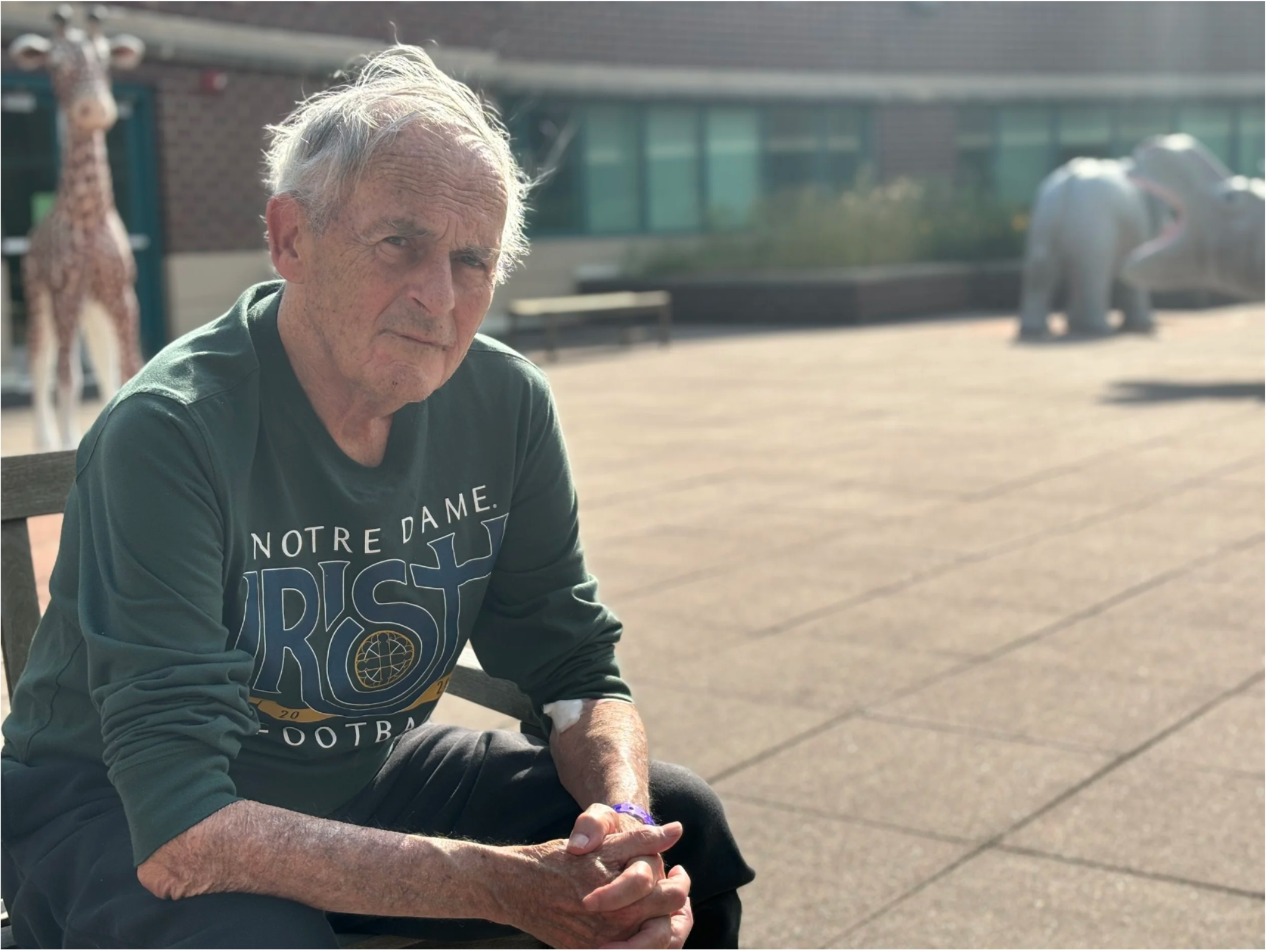
dad

An elderly gentleman with Alzheimer’s sitting outdoors, wearing a Notre Dame football sweatshirt, in a hospital courtyard featuring animal sculptures. He presents a pensive expression while seated on a bench. Remarkably clear about what he does and doesn’t know in the zoo.

Here is a man that could easily feel defeated, and at times had.

Here is a man that is aware that the present is just past the future and that the present seems disorganized, cloudy, and like a broken puzzle.

Here is a man who by his own action manifested his nightmare.

Here is my Dad — a human that, in spite of his disease, outputs perspective that helps me see and hold to the present magnitudes more than without him. I’m thankful that he found his way to me and became my Dad. I’m thankful that I am his son.

Reflecting on David

A blogger asked me 5 questions. What do you do?What do you like to read?How did you find this?What is your favorite joke?What is your dream?I thought my answers effectively communicated who I am and what I do. I thought to share them with you.I work in Customer Success by night and by day I am a professional musician in Milwaukee. Or perhaps that’s the other way around… I also maintain two blogs that I enjoy writing in for fun.  I enjoy reading widely — I’m reading a book on the history of the Philippines and one on system dynamics.  I’m a bit of a book work. I found your site via Perplexity.  I was searching for another method of publishing one of my blogs that involved Obsidian vs using Squarespace (which is where I currently maintain my blog).  My favorite joke: listening to people complain about traffic.  That’s funny for me because there’s a tendency to project into other driver’s a motive — “they cut me off, they’re in my way.”  It’s as if they have mind reading ability.  I would love that person who complains about traffic to be on my shoulder when I need minds read.  My dream?  Survive…. Calmly… and but not too calm.DavidGPT thought my answers are cheeky… which it believes is authentic to me. Me?

Revised DavidGPT

A year or so ago I took down my AI-chat bot. Now, I created a GPT using ChatGPT. The GPT is trained on all of my blog posts, all of my notes, book notes, writings, and thoughts. If you engage with the GPT, it will not be like you’re engaging with me. Instead, it will output knowledge and advice I might give. Give it a tryExample:Prompt: How would David advise me to approach a job search? I'm so frustrated that I can't find a job.Response (no indent for reading clarity):I hear you. That frustration is a tough weight to carry, and it’s easy to feel like every rejection chips away at your momentum. Let’s reframe this moment as an opportunity to refocus and build a plan rooted in clarity and connection.Step 1: Understand the LandscapeFirst, take a step back. The job market can feel overwhelming, but instead of seeing it as a monolith, think of it as a landscape to explore. Ask yourself:What industries or roles excite me right now?Where have I felt most effective or fulfilled in the past? This reflection helps you focus your energy on opportunities that align with your strengths and values. If you’re not sure where to start, revisit your past successes or seek input from people who know your work well.Step 2: Focus on RelationshipsMost opportunities come from connections, not cold applications. Tap into your network, but don’t make it transactional. Instead, lead with curiosity and generosity:Reconnect with former colleagues or mentors. Ask about their experiences and share your own journey.Attend industry events or online forums—not just to “get a job,” but to learn, contribute, and make genuine connections. If reaching out feels intimidating, frame it like this: What can I learn from this person? How can I offer value in return?Step 3: Reclaim the NarrativeFrustration often arises from feeling out of control. Reclaim your sense of agency by breaking the process into manageable steps:Target 3-5 roles a week. Research them thoroughly to tailor your applications.Dedicate time daily to growing your skills, whether it’s through online courses, volunteer work, or personal projects that showcase your expertise.Set aside 20 minutes a day for outreach—whether it’s LinkedIn messages, networking events, or asking for referrals.Step 4: Balance Doing with BeingWhen you’re constantly “doing”—applying, networking, strategizing—it’s easy to lose sight of the bigger picture. Take moments to reflect on why you’re pursuing this path:What kind of impact do you want to have in your work?How can this journey align with your broader life goals? Balancing your drive to “do” with moments to simply “be” will keep you grounded and motivated​.Step 5: Cultivate ResilienceRejections sting, but they’re not a reflection of your worth. Think of each as a step closer to the right opportunity. Celebrate small wins: a connection made, a skill learned, or even the effort of putting yourself out there.Remember:You’re not just looking for a job—you’re shaping your next chapter. It’s not about how fast you get there but about finding something that fits who you are and what you bring to the table. If there’s one thing I’d urge you to do right now, it’s to focus on the relationships and insights that will pave the way to where you’re meant to be. Where are you feeling most stuck, and how can we get you unstuck together?

Seth on gifts

By age 60, most Americans will spend nearly twice as much of their time alone as they do with a partner. The chart below makes that point super clear… the x-axis is age, not year.

   [caption id="" align="alignnone" width="2014"]   Source  [/caption] 

And if you notice that we spend the most time with ourselves, you can say that time with others is scarce. It’s also possible to say that resources, like time, that are scarce are oftentimes more valuable than abundant resources. Therefore, interacting with people you scarcely see can be considered valuable and precious. At the same time, we have a gift giving crisis. This is the time of year when people like to buy gift cards because they don’t know what to buy for others. The gift cards are from stores the recipient may never visit, the experience to buy and redeem are not thoughtful. If spending time with people you scarcely see is considered precious time, then the experience of buying a gift for these same people should be precious as well. Seth Godin, in a recent post, proposes a new process for gift card giving. See below.- Go the the online store, find an item you think a friend would like. Instead of ordering it, choose GIFT CARD.- The store asks you if you’d like to purchase a charitable donation add on as well.- Now, the site produces a unique digital gift card, with a picture of the item and a link to redeem it. The QR code it generates also includes a thank you from the charity.- Your friend simply has to scan the lovely page you printed out (or emailed them) to go to the redeem page. Once there, they can choose to get the item you carefully picked out, choose something else or easily get cash back.- And so, they get delighted three times: When they get the thoughtful card. When they go to the site and discover they can get the cash back. And when the item arrives in the post and they unwrap it.I love Seth for his thoughtfulness, his belief in the recipient’s agency, and the purchasing and redeeming experience — full cycle. It’s easy for a store to make a gift card redeem code available over email; it takes time, effort, and intention to make that experience ultra-meaningful. Seth proposes the missing x-factor: design.People who make products (hard or intangible) apply design and craft to build products that appeal to consumers. Now, many sites are optimized for fast click-thru and quick outcomes; that’s what consumers tend to want and what Google rewards. Seth’s proposal adds a few tweaks: gift giver picks what consumer might like, makes a gift card for that thing, creates an and makes an opt-in for a donation. Elegant and simple tweaks that say “hey, recipient, I am thinking about you…”. and allow for the recipient to say “yes, that’s me…” or “yes, thank you for thinking of me…”. The time spent purchasing and selecting the gift for the person you scarcely see in total is time spent in the service of others. As that time becomes scarce and scarce, the experience spending that time must proportionately become more and more meaningful.

Building credibility quickly

Quick thought: spend more time listening to understand how a person or thing’s system is preventing them from getting the outcomes they intend. Then, address the roadblock that will give you the most gains quickly with the least amount of problem solving energy.

Attracted to the conflict

I’m reading an article about a town of people in the United States. In that town, there is a segment of the citizenry that opposes illegal immigration. One citizen speculates that the more they make it difficult on illegals currently residing in the town, the more likely it is that those people will leave the town.

Depending on your worldview, you may see story’s antagonist as the citizen or the illegal immigrant. My worldview is that both sides are each other’s heroes and each other’s villain. And these dual nature identities attract me.

I am curious about people. I am curious about how worldviews are formed and how that worldview factors into our decision-making about people, places, and things. What is it about a citizen that may cause them to use and think inflammatory things about their neighbor — a citizen born to illegal immigrants? And I have questions about illegal immigrants — what happened that cause them to move? Why did they pick, if they were able to choose, an illegal means to come here? I am not interested in passing judgment, I am interested in the story.

I genuinely believe that people are just trying to do their best and are more often well natured until they’re not. And my experiences tells me that it’s through curiosity that we learn stories that help us understand the nature of others. And it’s my experience that through understanding stories that common ground and contentment can be derived. Predictably, I find myself at odds with many people when it comes to cultural issues or norms. I get it, I’m different, I don’t fall in line and I ask questions. I’m not welcome in any camp. And it’s that eerie and lonesome feeling of not quite belonging anywhere that gives me a sense of security — that the only real belonging I need to have is with myself.

Inspiration article: For Many People in This Small Town, Deportations Can’t Come Soon Enough by Arian Campo-Flores.

A reflection on jazz and death

From the documentary, “Who Killed Jazz” by Ben Makinen.“When I die, a friend of yours is going to die and you're gonna feel bad because you're not gonna have me in your life and it'll be a little different and you know you'll get used to it -- but we were in each other's lives and it was a beautiful thing. For me everybody I've ever loved in my life is going to die on the same day. It seems like there should be a word for that.” - Ron Bucknam (1949-2015)Ben, Ron, and other jazz musicians believe that word is — jazz. For the person who dies, it’s true, everyone in their lives dies all at once. For the person who lives, they lose a friend. The experience of time changes for each person based on their perspective. Ron believes this perspective is “jazz.” That makes sense.Jazz is multi-dimensional. For the performer — it’s a collection of many beautiful moments that are born and destroyed by the merciless arrow of time. For the listener — a ripple is experienced. They experience awe, shock, and wonder. They may not have the words to describe what they experience, but they know they love it. Sophisticated listeners pick up on the nuance, and perhaps they experience a bit of envy or desire to participate. Death, like jazz, is a multi-dimensional experience differentiated by the perspective of the person living it. Watch Ben’s beautiful 23-min documentary on YouTube.